Introduction
Root canal treatment is a dental procedure designed to save a tooth that is severely infected or decayed. Often misunderstood and feared, it is actually a straightforward procedure that relieves pain and restores dental health.
Understanding how root canal treatment works can reduce anxiety and help patients make informed decisions. In this article, we explain what a root canal is, why it is necessary, and how the procedure is carried out in three detailed visits.
What is a Root Canal?
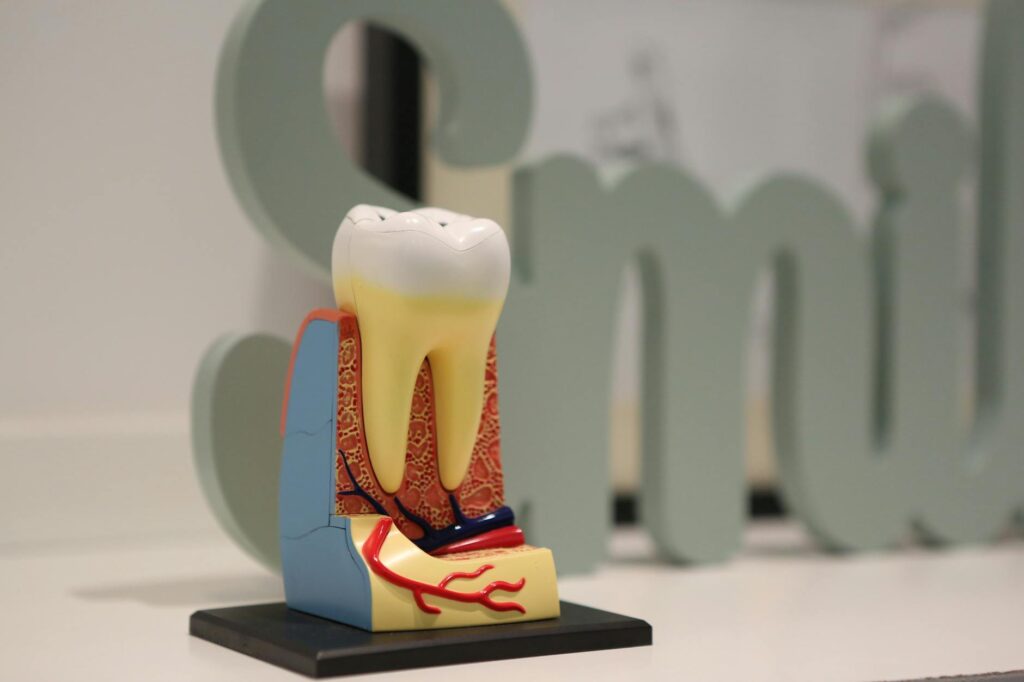
A root canal is a treatment used to repair and save a tooth that has been badly damaged by decay or infection.
- The procedure involves removing the infected pulp (the soft tissue inside the teeth),
- Cleaning and disinfecting the root canals, and
- Filling and sealing them to prevent reinfection.
The name “root canal” refers to the natural cavity within the tooth, which gets cleaned and sealed during the process.
Why is a Root Canal Necessary?
A root canal becomes necessary when the pulp inside the tooth becomes inflamed or infected, often due to:
- Deep dental decay
- Repeated dental procedures on the same tooth
- Cracks or chips in the tooth
- Trauma to the tooth
If untreated, the infection can cause severe pain, swelling, and abscess formation.
Root Canal Procedure in Three Visits
Root canal treatment usually takes three appointments for thorough cleaning, disinfection, and sealing.

Visit 1: Access Opening, Cleaning, and BMP
Temporary Filling: The tooth is sealed with a temporary material until the next visit.
Local Anesthesia: The dentist numbs the area.
Access Opening: A small opening is made in the tooth crown.
Cleaning: The infected pulp is removed, and canals are cleaned using special instruments.
Biomechanical Preparation (BMP): The canals are shaped with files and disinfected with antimicrobial solutions.

Visit 2: Recleaning and Canal Shaping
Temporary Filling (if required): To protect the tooth until the final appointment.
Recleaning: The temporary filling is removed, and canals are checked for any remaining infection.
Shaping & Filing: The canals are further smoothed and prepared for sealing.

Visit 3: Sealing and Final Restoration
Permanent Filling or Crown: A filling or crown restores the tooth’s normal function and protects it from further damage.
Sealing with Gutta Percha: A rubber-like material called gutta percha is placed inside the canals, along with sealer paste.
Benefits of Root Canal Treatment
Pain Relief: Stops the pain caused by infection.
Tooth Preservation: Saves your natural tooth instead of extraction.
Better Functionality: Restores normal chewing and biting.
Aesthetics: Looks natural after permanent restoration.
Common Myths About Root Canal Treatment
- Myth: Root canals are painful.
- Fact: Modern techniques and anesthesia make them no more uncomfortable than a regular filling.
- Myth: Root canals don’t last long.
- Fact: With proper care, a root canal-treated tooth can last a lifetime.
Is a Root Canal Painful?
With local anesthesia and modern dental methods, root canal treatment is generally painless. Most patients experience relief from pain after the first visit itself.
Success Rate of Root Canal Treatment
The success rate of root canal therapy is over 90%. With proper aftercare and restoration, patients can keep their treated tooth for decades or even a lifetime.
How to Prevent the Need for a Root Canal
- Brush twice daily and floss regularly
- Visit the dentist every 6 months
- Use a mouthguard if you play sports
- Avoid chewing hard objects like ice or pens
- Follow a healthy, low-sugar diet
What to Expect After Root Canal Treatment
- Mild Sensitivity: Tenderness for a few days is normal
- Aftercare: Take prescribed medicines, avoid chewing on the treated side initially
- Follow-up: Attend all check-ups to ensure proper healing
- Long-term: Maintain oral hygiene for lasting results
Conclusion
Root canal treatment is a safe, common, and highly effective procedure to treat infected teeth and preserve your natural smile. Understanding each stage of the process helps reduce anxiety and ensures better decision-making.
With proper dental hygiene and regular check-ups, you can avoid the need for root canal treatment—but if required, it is a reliable way to save your tooth and restore full functionality.
FAQs
What causes the need for a root canal?
Deep decay, repeated dental procedures, cracks, or trauma.
How many visits does a root canal take?
Usually 1–3 visits depending on the tooth condition.
Do I always need a crown after root canal treatment?
Not always, but back teeth usually need crowns as they withstand more pressure.
Can a root canal fail?
Yes, but rarely. Failures occur if canals are not fully cleaned or reinfection occurs.
What are the alternatives?
Tooth extraction, followed by replacement options like bridges, implants, or dentures.

With over a decade of experience in dentistry, I specialize in diagnosing a wide range of oral diseases and have developed a deep passion for dental imaging. My interest in CBCT reporting and digital implantology led me to become a pioneer in the concept of diagnostic 3D modelling. Throughout my career, I have supported and educated numerous dentists in mastering CBCT interpretation, virtual implant planning, and the latest advancements in 3D printing for dental applications. Read more about me on the “about me” page.
- Steiner’s Analysis – Free online Cephalometry - November 23, 2025
- A Complete guide to Grayscale values in CT & CBCT - November 15, 2025
- Struggling to get your old PC to run new Radiology software smoothly? Here’s a trick with SSD that might save you. - November 14, 2025